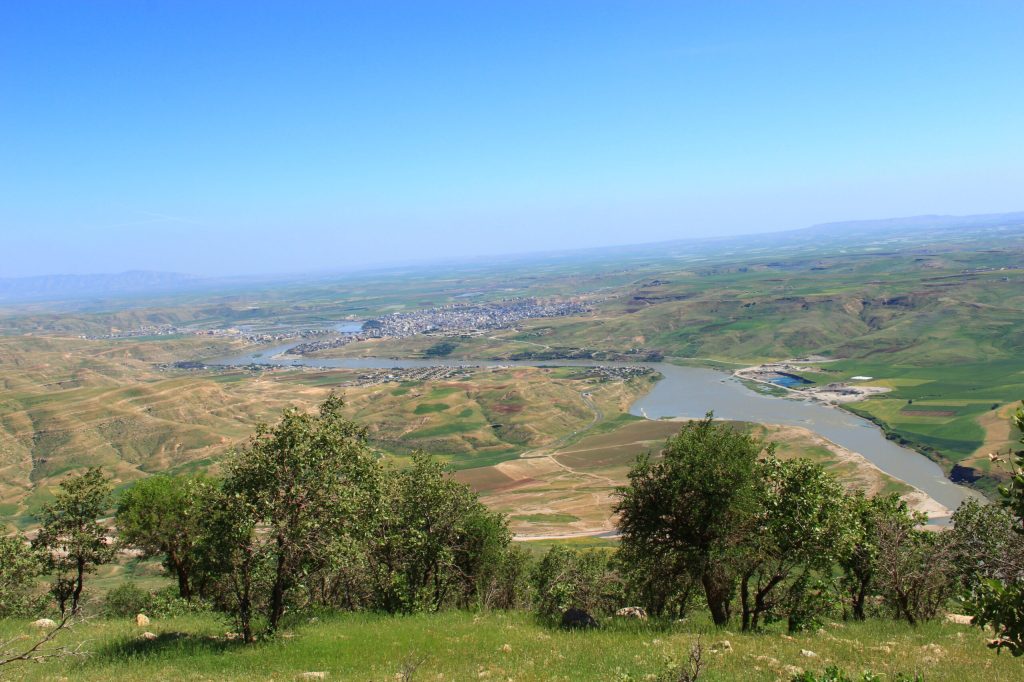
(di Salvatore Toscano – lindipendente.online) – Il governo turco ha approvato la costruzione della diga di Cizre, città della provincia a maggioranza curda di Sirnak attraversata dal fiume Tigri, il più lungo del Medio Oriente. Secondo le stime, la realizzazione della diga comporterà la sommersione di decine di insediamenti curdi e l’estinzione di diverse specie marine che attualmente vivono nel Tigri. A ciò si aggiunge il rischio di una grave e diffusa crisi idrica, che dovrebbe interessare particolarmente l’Iraq, dove il Tigri scorre prima di sfociare nel Golfo Persico. Samir Muxif Ciburi, presidente della commissione per le risorse idriche del parlamento iracheno, ha dichiarato che «una volta completata la costruzione della diga, l’acqua del fiume non fluirà più in Iraq». La condanna verso quella che Baghdad ha definito una violazione del diritto internazionale si discosta dalla sostanziale accondiscendenza con cui il governo iracheno ha trattato le violazioni della propria sovranità statale a opera della stessa Turchia, che negli anni ha bombardato il nord del Paese, il cosiddetto Kurdistan iracheno, nel suo piano di persecuzione del popolo curdo.
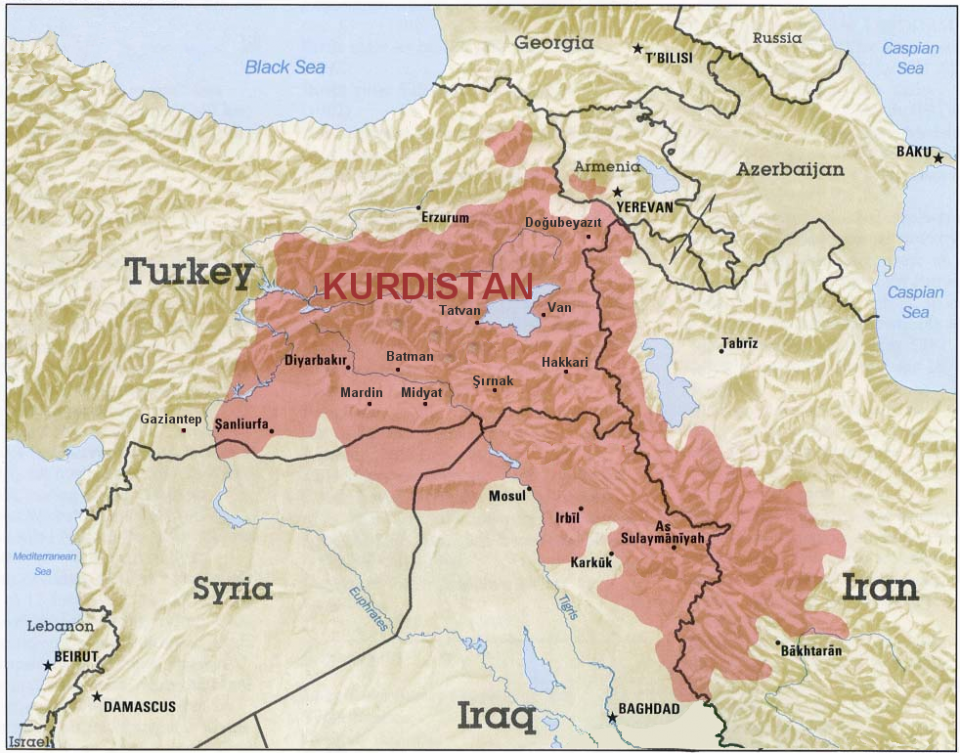
In Turchia, circa il 20 per cento della popolazione è costituito da una minoranza che il governo non riconosce né tutela: i curdi, un gruppo etnico iranico originario del Medio Oriente. Si tratta del popolo più esteso al mondo a cui non è riconosciuto dalla comunità internazionale alcun territorio. In Turchia, i curdi vivono principalmente nell’area situata nelle regioni dell’Anatolia orientale e sudorientale, in quello che viene definito Kurdistan settentrionale. Il sogno accarezzato nel 1920 con il Trattato di Sèvres di uno Stato curdo indipendente non è mai stato realizzato. Tuttavia, i curdi rivendicano ancora oggi la sovranità sulla regione geografica abitata storicamente e corrispondente oggi a parti di Siria, Iraq, Iran, Armenia e Turchia. La diga approvata dal governo turco riguarderà proprio il sud del Paese (o Kurdistan settentrionale), a maggioranza curdo. Il progetto è stato messo a gara nel 2013, poi sospeso e infine approvato da Ankara. La diga di Cizre sarà la decima del Tigri, nonché la seconda più grande dopo la discussa diga di Ilısu, con una potenza prevista di 240 MW. Al termine della costruzione, decine tra villaggi, siti storici, come quello della madrasa, e terreni agricoli verranno sommersi, attentando la vita e l’economia delle popolazioni locali. Un attacco chiaro e diretto che si inserisce nella più ampia cornice di persecuzione che Ankara attua indisturbata nei confronti dei curdi.
Alla discriminazione interna, si aggiungono le decine di incursioni operate negli anni nel nord della Siria e dell’Iraq, i territori dove i curdi godono di una maggiore autonomia, usata per realizzare esperienze di confederalismo democratico basato su rapporti orizzontali e non gerarchici, equa distribuzione delle risorse, parità dei sessi e rapporto simbiotico con la natura. Un esempio è il campo profughi di Makhmour, nel Kurdistan iracheno, abitato da circa 14mila persone e bersaglio di innumerevoli offensive provenienti tanto da Ankara quanto da Baghdad. Il 15 giugno 2020, 60 aerei da guerra sono partiti dalla penisola anatolica per bombardare 81 località dell’Iraq, tra cui appunto Makhmour. La violazione del diritto internazionale ha disturbato soltanto formalmente Baghdad, che se in superficie mostra irritazione in profondità coltiva il supporto al progetto turco per tutelare l’importante cooperazione economica con Ankara. Lo scorso maggio, il campo profughi si è opposto con tenacia all’aggressione dell’esercito iracheno, sferrata in un quadro d’intesa geopolitica con la Turchia. Intesa che adesso, con la costruzione della diga di Cizre, rischia di saltare.


La situazione dell’Irak è drammatica già così, ci mancava solo che la Turchia strozzasse un altro poco il fiume Tigri.
Questi sono veri e propri arbitri che stanno devastando le acque dolci e le zone umide di tutto il mondo.
Per ulteriori informazioni vedesi:
https://en.wikipedia.org/wiki/Mesopotamian_Marshes
History
Campaign in the marshes of southern Babylonia during the reign of Ashurbanipal. Showing Assyrian soldiers on boat chasing enemies trying to run away; some are hiding in the reeds.
In the 4th millennium BCE, the first literate societies emerged in Southern Mesopotamia, often referred to as the “Cradle of Civilization”, and the first cities and complex state bureaucracies were developed there during the Uruk period. Due to the geographical location and ecological factors of the Fertile Crescent, a crescent-shape fertile area running from the basins of the Nile in Egypt, northwards along the Mediterranean coast in Palestine and Israel, and southwards again along the Euphrates and the Tigris towards the Persian Gulf, civilizations were able to develop agricultural and technological programmes. The crucial trigger was the availability of wild edible plant species. Farming arose early in the Fertile Crescent because the area had a large quantity of wild wheat and pulse species that were nutritious and easy to domesticate.[36]
In the 10th and 11th centuries, the marshes were the site of the state of Batihah founded by ‘Imran ibn Shahin.
Draining and subsequent restoration efforts
Main article: Draining of the Mesopotamian Marshes
1994 map of the Mesopotamian Marshes with draining features
The draining of Mesopotamian Marshes began in the 1950s with the Central Marshes and gradually accelerated as it affected the two other main marshes until early in the 21st century with the 2003 invasion of Iraq. The draining of the marshes was intended at first to reclaim land for agriculture along with oil exploration but later served as a punishment for Shia Arabs in response to the 1991 uprisings in Iraq. The draining of the marshes was largely due to dams, dykes and other diversion structures constructed into Iraq but were exacerbated by upstream dam construction in Syria and Turkey.[24]
While the British engineers worked with the Iraqi government, Frank Haigh developed the Haigh Report in 1951. His report recommended a complex of canals, sluices, and dykes on the lower portions of both the Tigris and Euphrates. These water control structures could be used to drain marshes therefore creating profitable farmland. In 1953, construction began on the Third River or Main Outfall Drain and later the Saddam River which would drain water from the Central Marsh under the Euphrates and through a canal eventually into the Persian Gulf.[24] Work on the Third River and other draining projects, particularly for the Hawizeh Marsh, quickly progressed in the 1980s during the Iran–Iraq War in order to afford Iraqis a tactical advantage in the marshes.[13] Part of the Hammar Marshes was also drained in 1985 to clear area for oil exploration.[37]
After the 1991 Gulf War, Shia Muslims in southern Iraq rebelled against Saddam Hussein who in turn crushed the rebellion and further accelerated the draining of the Central and Hammar marshes in order to evict Shias that have taken refuge in the marshes.[13] With the exception of the Nasiriyah Drainage Pump Station, the 565 km (351 mi) Third River was completed in 1992 and two other canals were constructed south and nearly parallel to it. One, the Mother of Battles canal, was constructed to divert the flow of the Euphrates south below the Hammar Marsh. Second, the 240 km Loyalty to Leader Canal also known as the Basrah Sweetwater Canal, which originates in the lower Euphrates region, collected water from the terminus of the Gharraf River and diverted it under the Euphrates, away from the Central Marshes and below the Hammar Marshes towards Basrah.[13][38] The Glory River was also constructed to divert water from the Tigris’s southern-flowing distributaries east and parallel along the Tigris until they reached the Euphrates near its confluence with the Tigris at Qurna.[13]
By the 2003 invasion of Iraq, the marshes had lost 90% of their size from the previous decades.[28] The Central and Hammar Marshes were nearly drained and only 35% of the Hawizeh Marshes remained.[10] After the invasion, locals destroyed dikes. The combined efforts of the Iraq government, United Nations, U.S. agencies and record precipitation in Turkey helped begin a restoration of the marshes.[39] As of late 2006, 58% of the original marshes had been reinundated.[40] The Nasiriyah Drainage Pump Station was completed in 2009, affording the Third River to be used for agricultural drainage.[41] Recent drought and continued upstream dam construction and operation in Turkey, Syria and Iran have reduced the marshes to around 30% of their original size by 2009.[11] Turkey has built at least 34 dams on the Tigris and Euphrates rivers, threatening marsh recovery.[42][43][44][45]
From a high of around 75% restored in 2008, the wetlands receded to 58% of their average pre-drained level by spring 2015. Meanwhile, as the water level fell, salinity increased to 15,000 parts per million in some areas, up from 300 to 500 ppm in the 1980s. “When the river water levels were high, the low-saline Tigris washed over the marshes, cleansed them, and pushed the salty residue into the saltier Euphrates, which flows along the western edge. But now the Tigris is so low that the Euphrates provides most of the water in the marshes.”[46]
The government prioritizes providing water to cities along the Tigris and Shatt al-Arab, resulting in reduced flow to the marshes.[47]
"Mi piace""Mi piace"
I curdi non sono degni di essere difesi.
Mica sono nazisti ucraini, ci hanno solo salvato dall’Isis, inoltre:
“… i territori dove i curdi godono di una maggiore autonomia, usata per realizzare esperienze di CON FEDERALISMO DEMOCRATICO basato su RAPPORTI ORIZZONTALI e non gerarchici, EQUA DISTRIBUZIONE delle risorse, PARITÀ dei sessi e RAPPORTO SIMBIOTICO con la NATURA.”
Stiamo scherzando? Potrebbe essere contagioso…
I curdi sono i nuovi nativi americani. Da sterminare.
"Mi piace"Piace a 2 people
“I curdi sono i nuovi nativi americani. Da sterminare.”
Sono circa 15 milioni nella sola Turchia, ma forse con un po’ di impegno ce la possiamo fare 😁
"Mi piace"Piace a 1 persona
Bazzecole, Liliana… tra il ‘500 e il ‘900 sono stati stimati tra i 55 e i 100 MILIONI di nativi americani sterminati in vari modi, volontari e non…
https://it.m.wikipedia.org/wiki/Genocidio_dei_nativi_americani
"Mi piace""Mi piace"
“…l’estinzione di diverse specie marine che attualmente vivono nel Tigri…”
a 1000 km dal mare ??? 😐
"Mi piace""Mi piace"
Forse intendeva “acquatiche”?
"Mi piace""Mi piace"
Aggressore e aggredito?
Ma come sono cattivi questi turchi! Oddio, sono dei nostri NATO… forse cattivini, un po’… Erdogan sultano…
Le pallavoliste turche hanno vinto l’ Europeo. Senza velo che a Istambul si vede pochissimo tra le giovani: una città europea. Ma Erdogan non è un sultano che toglie le libertà?
Belle a brave.
Noi , invece… Pazienza, dovevamo “mostrare” la Egonu… Era quello l’ importante…
Provinciali fino all’ ultimo.
"Mi piace""Mi piace"